Proactive Monitoring for Healthier Smiles
The foundation for a lifetime of healthy smiles begins in childhood. At Becker Orthodontics, we believe in the power of early observation and proactive care to guide your child’s dental development in the most favorable direction. Our complimentary Growth & Development program serves families in Phoenixville and Plymouth Meeting, PA, providing expert monitoring to help prevent complex orthodontic issues before they develop.
Dr. Becker’s conservative, patient-centered approach means we only recommend treatment when it’s truly necessary. Many children simply need periodic monitoring to ensure proper development, while others benefit from timely intervention that makes future treatment shorter, simpler, and more comfortable.
Why Early Monitoring Matters
The American Association of Orthodontists recommends that all children have their first orthodontic evaluation by age seven. However, at Becker Orthodontics, we begin our complimentary observation program even earlier—at age six—when crucial development patterns first become visible.
During this critical growth period, your child’s jaw bones are still developing, and permanent teeth are beginning to emerge. This creates an optimal window for identifying potential problems and, when necessary, guiding growth in a more favorable direction. By observing patterns every six months, Dr. Becker can detect issues like crowding, crossbites, underbites, or jaw growth discrepancies before they become more complex.
This proactive approach often reduces the duration and complexity of future treatment and, in many cases, eliminates the need for more invasive procedures such as tooth extractions or jaw surgery later on.
Our Free Observation Program
Comprehensive Evaluation Every Six Months
Your child will visit our office twice yearly for thorough examinations with Dr. Becker. During these appointments, we carefully evaluate teeth positioning, jaw development, bite alignment, and facial growth patterns. These regular check-ins allow us to spot changes early and intervene at the optimal time if treatment becomes necessary.
Advanced Diagnostic Technology
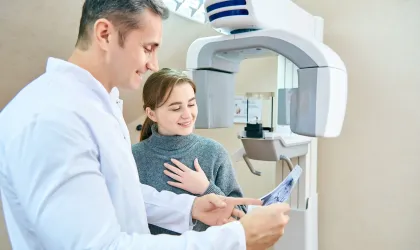
We use state-of-the-art digital imaging to document your child’s development over time. Regular photographs and X-rays create a comprehensive record that helps us track growth patterns and make informed decisions. This technology also allows us to show you exactly what we’re seeing and explain any concerns in clear, visual terms.
No Pressure, No Hidden Costs
Our observation program is entirely free, with no obligation for future treatment. We’re committed to honest, conservative care that prioritizes your child’s best interests. Not every child needs orthodontic treatment, and we’ll never recommend unnecessary treatment.
Clear Communication
After each evaluation, Dr. Becker will discuss his findings with you in straightforward language. You’ll understand exactly what we’re monitoring, why it matters, and what options exist if treatment becomes advisable.
Understanding Phase 1 Treatment
While many children simply need monitoring, some benefit from Phase 1 treatment—also called interceptive orthodontics. This limited course of treatment typically occurs between ages six and nine, while your child still has a mix of baby and permanent teeth.
Phase 1 isn’t about creating a perfect smile right away. Instead, it focuses on addressing specific issues that are easier to correct during active growth, including:
- Guiding jaw growth to correct skeletal imbalances
- Creating adequate space for incoming permanent teeth
- Correcting harmful bite patterns like crossbites or severe underbites
- Breaking damaging oral habits
- Reducing the risk of trauma to protruding front teeth
Not All Children Need Phase 1 Treatment
This is crucial to understand: Phase 1 treatment benefits only a small percentage of children. Dr. Becker’s conservative philosophy means we carefully evaluate whether early intervention will genuinely improve your child’s outcome.
After your child’s comprehensive evaluation, you’ll receive one of three recommendations: no treatment necessary at this time, continued observation to monitor development, or Phase 1 treatment to address a specific issue now.
Conditions We Monitor and Treat
| Issue |
Why It Matters |
When to Address |
| Severe Crowding |
May prevent permanent teeth from erupting properly |
Often monitored; treated if space is critically limited |
| Crossbites |
It can cause uneven jaw growth and tooth wear |
Best corrected during active growth |
| Severe Underbites/Overbites |
May indicate skeletal jaw discrepancies |
Early intervention guides jaw development |
| Impacted Teeth |
Permanent teeth are unable to erupt normally |
May need early space creation or guidance |
| Harmful Oral Habits |
Thumb sucking and tongue thrusting can affect development |
Address before permanent teeth erupt |
| Severe Spacing |
Excessive gaps between teeth |
Usually monitored; rarely needs early treatment |
What Early Treatment Can Accomplish
When Phase 1 treatment is indicated, it can achieve remarkable results. Guiding jaw growth during developmental years can correct skeletal imbalances that become much more difficult—sometimes requiring surgery—to address in adulthood. Creating adequate space for permanent teeth reduces the likelihood of impaction, severe crowding, or the need for tooth extractions later.
Many parents ask whether early treatment means their child won’t need braces later. The honest answer is that most children who receive Phase 1 treatment will still benefit from Phase 2 treatment with full braces or clear aligners during adolescence. However, Phase 2 is typically shorter, less complex, and produces more stable results when preceded by an appropriate Phase 1 intervention.
Signs Your Child May Benefit From Evaluation
While we welcome all children age six and up into our observation program, sure signs suggest your child should be evaluated sooner:
- Early or late loss of baby teeth
- Difficulty chewing or biting food
- Mouth breathing or snoring
- Persistent thumb sucking after age five
- Speech difficulties or impediments
- Protruding teeth or severe crowding
- Jaw that shifts when opening or closing
- Teeth that don’t meet normally when biting
- Facial imbalance or asymmetry
If you notice any of these signs, don’t wait—schedule a complimentary evaluation with Dr. Becker.
Setting Realistic Expectations
It’s important to understand that growth and development monitoring is precisely that—monitoring. Many children participate in our observation program for several years without ever needing intervention. This is a good thing! It means their development is proceeding normally.
For children who do need treatment, the timing varies significantly. Our observation program helps determine the optimal timing for each child—not too early when issues might self-correct, and not too late when problems have become more challenging to address.
Making It Affordable and Accessible
Our observation program is entirely free—no consultation fees, no evaluation charges, no strings attached. We believe every child deserves expert monitoring during these crucial developmental years.
If Phase 1 treatment is recommended, we offer flexible financing through OrthoFi with means-tested payment plans that fit your family’s budget. We also work with major insurance providers to maximize your benefits. Most importantly, investing in early monitoring and appropriate intervention now can actually reduce overall orthodontic costs by addressing issues at the optimal time.